


 David Kimathi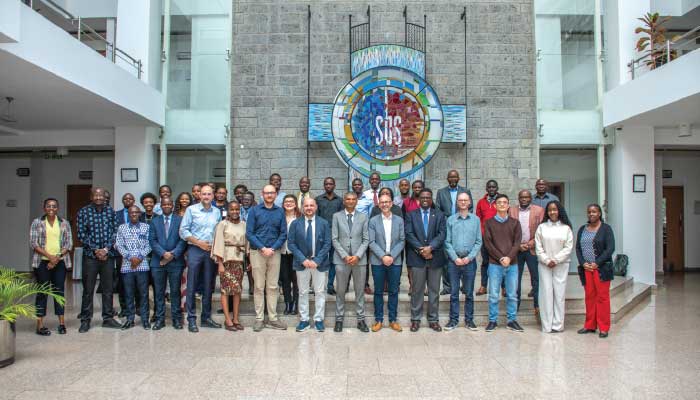
Strathmore University hosted a two-day international research dialogue bringing together scholars from Europe and Africa to explore how Artificial Intelligence (AI) can be applied to address key challenges across the continent. The dialogue, held on April 22 and 23, 2026, was organized in collaboration with Université Polytechnique Hauts-de-France and the University of Catania under the theme of AI for Health and Development-Focused Innovation.
The discussions brought together leading academics, including Thierry Delot, Anh-Tu Nguyen, Fabien Béchet, Concetto Spampinato, and Federica Proietto Salanitri, who shared their expertise in artificial intelligence, smart systems, and digital health.
The first day of the dialogue focused on identifying pressing African challenges that could benefit from AI-driven solutions. These included issues related to urban systems, transportation inefficiencies, and healthcare limitations. The second day, held at the Chemistry Lab at Strathmore University, shifted towards developing practical, innovative solutions through collaborative group work.
Participants were divided into three thematic groups: Smart Cities and Urban Systems, Transport and Mobility, and Digital Health. Each group was tasked with developing concept ideas that apply AI technologies to real-world challenges.
The Smart Cities and Urban Systems group proposed several innovative solutions, including the use of AI-powered drones for environmental monitoring, such as tracking deforestation and analyzing animal behavior. The group also explored AI-driven optimization of food supply chains to improve logistics and reduce waste, as well as digital agriculture solutions using drones to monitor crop health, enhance drought resilience, and protect crop yields. Additional ideas included infrastructure surveillance systems to monitor electricity networks and multi-agent systems to collect and disseminate agricultural data to farmers, addressing the knowledge-sharing gap.
The Transport and Mobility group focused on improving urban transportation systems through AI. Their proposals included adopting electric vehicles for mass transit, with consideration of battery lifecycle management, as well as driver assistance systems powered by computer vision to enhance passenger safety and build public trust. The group also highlighted the importance of real-time monitoring of transport networks to optimize routes and improve efficiency.
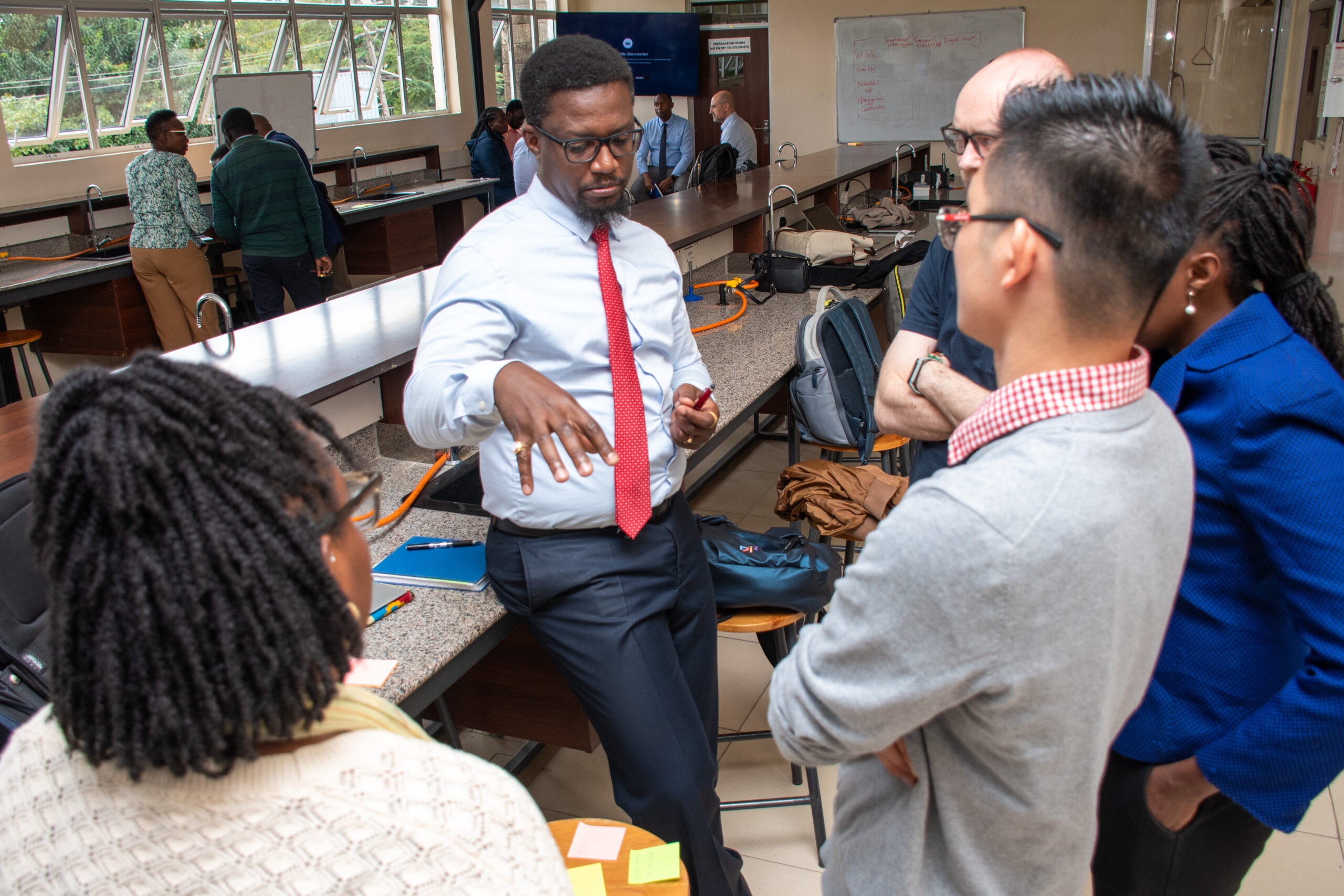
The Digital Health group explored how AI can transform healthcare systems, with a strong emphasis on the role of data in building effective solutions. Discussions highlighted challenges around data quality, accessibility, storage, and ownership—particularly in the African context, where datasets are often limited or fragmented. Their concepts included the use of medical imaging and AI-driven prognosis tools to support diagnosis and treatment, the integration of embedded systems in healthcare delivery, and the importance of policy and regulatory compliance to ensure ethical, secure, and effective implementation of AI technologies.
Following the group sessions, participants reconvened to present and discuss their ideas, fostering cross-disciplinary dialogue and feedback. The exchange of perspectives highlighted the importance of collaboration in addressing complex societal challenges and demonstrated the potential of AI as a tool for sustainable development in Africa.
The research dialogue concluded with a recognition of the participating scholars and a renewed commitment to strengthening international collaboration between African and European institutions. The discussions underscored the role of innovation, research, and knowledge exchange in shaping solutions that are both contextually relevant and globally informed.
Overall, the dialogue emphasized that while Africa faces unique challenges, the strategic application of artificial intelligence, supported by collaboration, research, and policy frameworks, can play a transformative role in advancing sustainable development across the continent.
Article written by David Kimathi and Jonathan Icubahiro.